What to Tell Your Stylist for a Pixie Cut: The Script For Older Women
Walking into the salon with “I want a pixie” sounds simple, but pixies are not one-size-fits-all. On older women, the details matter more than the length. Your hairline, density, shrinkage, and how your hair behaves at the crown can change the whole outcome.
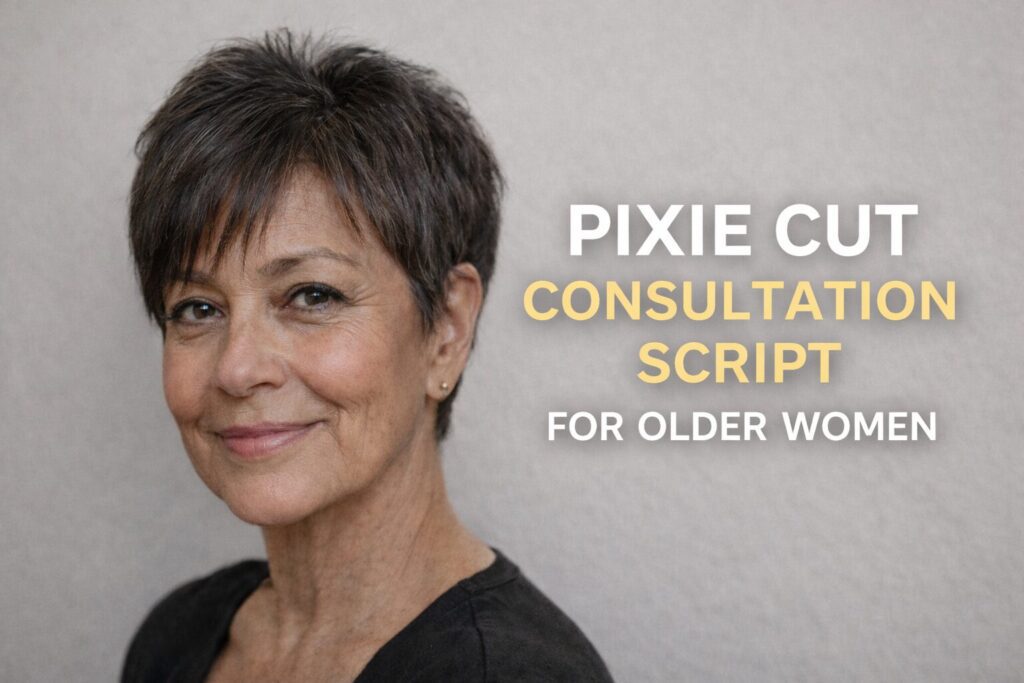
This post gives you a simple way to explain what you want, so you leave with a pixie that fits your face and your real life. No awkward guessing. No walking out with something you did not ask for.
Why pixie cuts can go wrong
Most pixie cut disappointments come from one of these issues:
- The sides are cut too tight and the top is not balanced
- The crown is flat, so the shape looks heavy in front
- The hairline is pushed back or over-edged
- Too much thinning makes the hair look sparse
- The cut needs daily heat to look good, but nobody said that in the consult
The fix is not more styling. It is a better consultation.
Step 1: Bring the right photos
Bring 2–3 photos that show:
- Front view
- Side view
- Back view
Avoid photos that are:
- Heavy filters
- Perfect studio lighting only
- Wig units when you are asking for a cut on natural hair
- Photos with a totally different hair density than yours
If you love a wig pixie look, that is fine. Just tell your stylist you want the shape and vibe, not the exact density.
What to say when you show the photos
Use this line:
“I like the shape and the balance of this pixie. I want something similar, but adjusted for my hairline and density.”
That one sentence keeps the conversation realistic and respectful.
Step 2: Decide your non-negotiables
Pick 2–3. That is it. Too many rules makes it confusing.
Common non-negotiables:
- “I do not want my sides shaved.”
- “I need gentle coverage at the temples.”
- “I want volume at the crown.”
- “I want soft edges, not a sharp line-up.”
- “I need it to look good without daily heat.”
Step 3: Use this pixie consultation script
You can literally read this in the chair. Adjust the words to sound like you.
The script
“I want a pixie cut that looks soft and flattering, not harsh. I want the shape to have lift at the crown so it does not sit flat. Please keep the hairline natural and do not push it back. I do not want heavy thinning because my hair is not super thick. I want the sides neat, but not bald, and I want the top left long enough to style with light product. I also need it to look good on air-dry days.”
That covers the main things most people forget to say.
Step 4: Tell them your hair facts
Your stylist can only help if they know what you are working with. Be direct.
Say one or more of these:
- “My hair is fine, so I need the ends to stay full.”
- “My crown can go flat, so I need a little lift there.”
- “My edges are delicate, especially at the temples.”
- “My shrinkage is strong, so I do not want it cut too short.”
- “I wear glasses, so keep the sides comfortable around the ears.”
This is not complaining. This is planning.
Step 5: Ask the right questions before they start cutting
These questions save you.
1) How will you build volume at the crown?
You are listening for: layering placement, crown shaping, direction of blow dry, or a plan for lift.
2) Are you going to thin the top?
If your hair is fine or thinning, you may not want thinning shears at all. A little texture is fine. Heavy thinning is not.
3) What will the grow-out look like in 4–6 weeks?
A good pixie still looks like a pixie as it grows. If the shape collapses quickly, you will be frustrated.
4) What styling will this cut need on normal days?
This is the big one. If it needs heat daily, you should know now, not later.
Step 6: Choose the pixie shape that fits your face
You do not need to overthink face shape, but these guidelines help.
If your face is round
Ask for:
- Height at the crown
- Slightly longer top
- Soft side swept fringe
Avoid: - Flat top with wide sides
If your face is long
Ask for:
- Soft fringe or side fringe
- Some width at the sides
Avoid: - Too much height on top
If you have strong cheekbones
Ask for:
- A tapered side that shows the cheekbone
- Soft texture on top
This one is usually a win.
If you want jawline softening
Ask for:
- A longer pixie bob shape
- Pieces that sit around the cheek or jaw area
Step 7: Pick your neckline and side detail
This is where a pixie can look clean or look choppy.
Neckline options
- Tapered nape: softer, grows out better
- Squared nape: sharper, needs more upkeep
If you want low maintenance, go tapered.
Sideburn options
- Softly defined sideburns look polished and feminine.
- Very sharp sideburns can feel harsh if you do not want that vibe.
Step 8: Styling notes to keep it looking fresh
You do not need a 7-step routine.
Simple routine
- Use a lightweight leave-in
- Add a small amount of mousse or foam for hold
- Blow dry with fingers for lift, or air dry and shape with your hands
- Finish with a tiny dab of paste to separate pieces
Common mistakes
- Too much oil on fine hair, it kills volume
- Over-brushing the top, it makes it flat
- Heavy edge control that hardens the hairline
FAQs
How do I avoid a pixie that looks too masculine?
Ask for soft edges, a little length on top, and a gentle fringe. Also ask your stylist to avoid overly sharp lines unless you specifically want that look.
Can I get a pixie cut if my edges are thinning?
Yes, but the plan matters. Ask for soft coverage at the temples, a natural hairline, and no pushed-back edging. A pixie bob with a longer front can also help you feel more covered.
How often do pixie cuts need a trim?
Most pixies feel best with a shape-up every 4–6 weeks. If you like it very crisp, you may prefer every 3–4 weeks.
Wrap-up
A pixie cut can be one of the most flattering styles you can wear after 50 and 60, but the consultation is everything. Go in with the right photos, pick your non-negotiables, and use a simple script that protects your hairline and your density.
If you want to make this even easier, screenshot the script section and read it to your stylist. You will leave the chair with a pixie that looks like you, not a random haircut that just happens to be short.